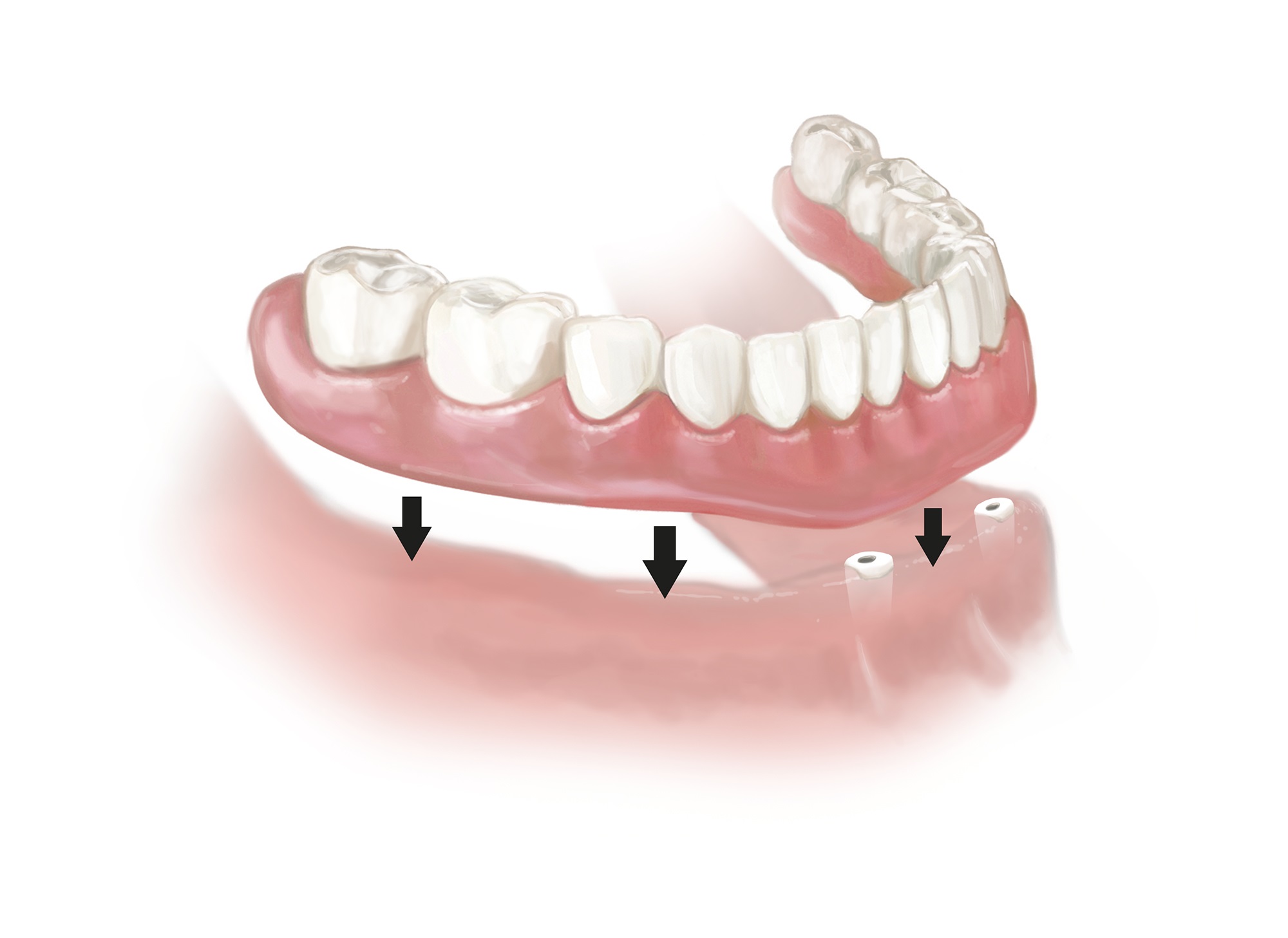
A denture on pillars
Single roots of your teeth are used as pillars
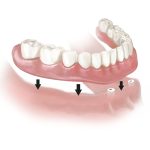
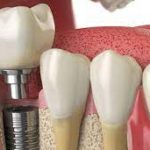
You are getting an overdenture. This is a big change because your new denture plays an important role in chewing and speaking. Moreover, your artificial teeth are very important for your appearance. After all, your teeth are your first eye-catcher. In ‘regular’ dentures, no roots of your own teeth are used. With overdentures, however, they are. These act like pillars under the dentures, giving your teeth grip and support.
Slackening of the jaws in case of overdenture
With an overdenture, your jaws shrink less quickly
About 20 per cent of the Dutch population aged 16 and above wear partial or full ‘normal’ dentures. Almost one-third of these people have problems with them. Often, over time, the dentures no longer fit properly. This is usually due to shrinking of the jaws. This creates space between the dentures and the jaw. The dentures then become increasingly loose.
If some of the roots of your teeth can be retained, shrinking of your jaws can be largely prevented. In ‘normal’ dentures, the pressure created by chewing is absorbed by the toothless jaws. With overdentures, this is largely absorbed by the pillars under the dentures. As a result, the jaws shrink much less quickly.
What is the procedure for overdenture treatment?
Pre-treatments
Before the dentist can make the overdenture, he has to carry out a number of preparations, called pre-treatments.
Picking the pillars
First, the dentist carefully considers which roots of your teeth are best to use as pillars under your overdenture. Often, these are the roots of the canine teeth. To properly assess the quality of your roots, your dentist will take X-rays.
Pulling the molars
Usually, your dentist will then pull the molars he does not use as pillars for the overdenture. After pulling, the wounds should be given some time to heal. Your teeth will therefore remain in place for the time being. At first, being without molars is a bit of a struggle. But you will see that it does not take long anyway. Contact your dentist if it doesn't. Shortly after pulling your molars, the wounds have not yet healed properly. Then it is best to take soft foods. After that, you can try to eat what you were used to again.
Pre-treatment of the pillars
The teeth whose roots will serve as pillars usually receive a pre-treatment. Each root has a cavity inside. Your dentist cleans and fills it. This prevents later inflammation of the roots. Sometimes this treatment has already been done in the past. In that case, your dentist does not need to do it again.
Making the overdenture
Making an impression with an impression tray
The root canal of the tooth (l) is pre-treated (m), the tooth is abraded and filled (r)
Create prints
An impression of your jaw is made using an impression tray filled with a special impression material. In the dental laboratory, that impression is filled with plaster. This creates a plaster model. A well-fitting impression tray is then made of synthetic resin. Another impression is taken with this tray to obtain an even more accurate plaster model. Your overdenture will be made on this.
Contact between upper and lower jaw
During your next visit, the dentist will determine the position of your upper and lower jaw in relation to each other. He determines how the teeth in the upper and lower jaw should make contact with each other so that you can chew properly with your overdenture.
Colour, position and shape of artificial teeth
Are you happy with the colour, shape and position of your own teeth? Or perhaps not at all? Inform your dentist about this before the overdenture is made. Your dentist can advise you on this. He will try to take your wishes into account as much as possible.
The final stage
Before the dentist can place your dentures in your mouth, he has to do two more things. First, he grinds down the teeth, which will act as pillars for the overdenture, to just above the gums. Only the root of such a tooth thus remains. He closes the pre-treated canal with a filling. Then your dentist extracts the remaining teeth that remain in your mouth. Immediately afterwards, he places the overdenture. So you do not have to worry that you will walk around without teeth for some time.
The first days with the overdenture
Post-operative bleeding
The wounds may bleed a little in the first few hours after your teeth have been extracted. This may cause your saliva to turn red. This will stop fairly quickly. Your saliva will then return to its normal colour. This does not mean that the wounds have healed completely. It is also best not to rinse your mouth for the first 24 hours. This is because blood clots form in the wounds. If you rinse, these clots will come loose and the bleeding will start again. You may drink, however.
There is a small chance that the bleeding will not stop, despite the precautions taken. If this happens, please notify your dentist. Please also contact your dentist if you continue to experience pain. In any case, do not simply take a painkiller. Some painkillers can actually make the bleeding worse. Discuss with your dentist what you should and should not do during the first 24 hours.
Appearance
When you look in the mirror, you probably have to get very used to it. After all, your mouth is an important eye-catcher and it has changed. Take a few days to get used to it and only then judge how you look with your new overdenture.
Pain
For the first few days, your dentures will not be very comfortable. It may clench and cause pain. Nevertheless, you should definitely not remove it from your mouth, as it sits like a bandage on the wounds. Especially chewing may cause pain at first. Eat only soft things, such as mashed potatoes, minced meat and soft fruit.
Getting used to the overdenture
Try to slowly start eating harder things
Only when you return to your dentist will the overdenture be allowed out of your mouth for the first time. Your dentist will clean the wounds if necessary. He may make minor corrections to your dentures, which may significantly reduce or eliminate pain. To clean your mouth, rinse it gently with lukewarm water. You may want to add a little salt to that. You can also use a mouthwash containing chlorhexidine, such as Perio-Aid or Corsodyl, available at the drugstore for this purpose. Rinsing with lukewarm camomile tea is also very good. After a few days, the wounds will start to heal and the pain will disappear. You will then slowly get used to your overdenture. This takes time. Some will get used to it faster than others. Do you find it very difficult? Then ask your dentist for advice.
Food
Eating with your new overdenture is somewhat uncomfortable. Especially in the beginning, you will have to be careful. You will know best what you can and cannot do. Slowly try to eat harder foods. It is better not to bite off pieces with dentures. Therefore, cut your food into pieces and chew slowly and evenly with your false teeth. When doing so, take a piece of food into your mouth on both sides. Take more time than you were used to.
Talking
In the beginning, you still talk a little awkwardly. It is as if you are talking with a full mouth. Certain sounds will sound different from what you are used to. This is normal. It usually improves after a few days. Practice more with those words or letters that do not yet sound quite to your liking. Read the newspaper aloud, for example.
Regular cleaning of the overdenture
Brush the pillars with a soft toothbrush and fluoride toothpaste
Clean your dentures after every meal.
If you are allowed to take off your overdenture, you should clean it and especially the pillars thoroughly after every meal and before going to bed. Food residue easily remains on the dentures but also underneath them, on the pillars and the mucosa on which your teeth rest: your jaws, palate and the transition from the jaws to the cheeks. If you don't remove them, cavities form in the pillars and the gums around them become inflamed. As a result, they eventually lose their hold, become loose and can cause pain.
The overdenture
Food particles on the inside and outside of the overdenture are best removed using a special denture brush, e.g. from Lactona or Oral-B, and water. Do not use toothpaste. It can be too abrasive. Clean dentures always feel smooth. Do not let your smooth dentures slip out of your hands during cleaning. It will break. To be safe, fill the basin with water first and clean your dentures above it.
Clean your prosthesis daily with a cleaning agent available at the drugstore or pharmacy. When doing so, follow the manufacturer's instructions. If necessary, ask your practitioner or dental hygienist for advice. In any case, put your dentures in a cleanser overnight once a week. This will prevent tartar from forming on your dentures. Afterwards, brush your dentures well and rinse them with water. Never put your dentures in hot water and definitely do not use bleach or abrasives.
Also clean the pillars and your mouth
In the beginning, when the wounds have not healed completely, rinse your mouth with a little lukewarm water after every meal. After that, brush the pillars and the mucous membrane of the jaws at least once a day with a soft toothbrush. It is best to use ordinary fluoride toothpaste. Once a day, apply a jelly (Corsodyl) in the overdenture at the location of the pillars. This provides extra protection against caries (cavities) and gum inflammation. Corsodyl can be bought in any pharmacy. Place your dentures with the jelly in your mouth for about thirty minutes. Then remove it from your mouth and rinse it clean under the tap.
Take off your dentures at night
Your jaws need a while to get used to the overdenture. Therefore, leave your dentures in your mouth at night during the first week. After that, it is better to take them out at bedtime. This way, you also give your jaws a rest. Do you dislike sleeping with an empty mouth? Then only take out your lower teeth. But would you prefer to wear your entire denture day and night? Then have your dentist check your mouth and dentures at least once every six months.
If you are not wearing your dentures, store them in a glass of water. Change the water every day. You can also store your dentures in a glass filled with cleaning solution. Always rinse your dentures thoroughly with water before putting them back in your mouth.
Adjustments to the overdenture
After some time, you will feel that your dentures are slightly looser. This is normal. The wounds have healed, causing your jaws to shrink slightly. This has created space between your jaw and your dentures. After about six weeks, or preferably a little longer, the dentist can adjust your dentures. He can apply a new layer or ‘lining’ to your dentures, making them fit more securely again. In most cases, you will then have to do without your dentures for one or two days.
Once you have a cover prosthesis, is it ready forever?
Your jaws shrink, causing your dentures to become loose.
Over time, you will become accustomed to your new artificial teeth. So much so, in fact, that it will seem as if they have always been there. However, this will not remain the case. Your mouth will change as your jaws shrink. Your dentures will remain the same size. This creates space between your overdenture and your jaw, causing your teeth to become loose over time. With an overdenture, the jaws shrink much less quickly than with regular dentures. If your overdenture no longer fits properly, it may press harder on some parts of your jaw than others. This can cause pain. If this happens, consult your dentist. Do not sand or file your overdenture yourself! In such cases, your dentist will adjust your dentures. They can apply a new layer or ‘lining’, which will make the overdenture fit more securely again.
Checking your overdenture
It is imperative that you visit your dentist once every six months for check-ups. Regular check-ups are important to keep the pillars healthy. The dentist will check the pillars, your jaws and the overdenture. Moreover, he can guide you in keeping them clean. He may also be able to correct minor defects in the pillars and overdenture that you may not notice yourself.
Additional features with overdentures
Additional features: push buttons (l) and a rod (r)
Sometimes, over time, it turns out that your overdenture has less grip than you expected. Usually, your dentist can then make additional provisions. For example, he may make push buttons in the pillars and in the denture. Or he can use another (much more expensive) method. Then the dentist makes gold caps on the roots, which he connects by a rod. In the dentures, he inserts a sleeve that fits exactly over this rod. This allows the dentures to click into place, so to speak. This system, like the push-buttons, can give considerably more grip to the overdenture. In both cases, you may need an entirely new overdenture.
Easy transition to ‘regular’ dentures
An overdenture has basically the same shape and dimensions as ‘regular’ dentures. Therefore, if unexpectedly the pillars are lost anyway, the overdenture can easily be changed to a ‘normal’ denture. Only a small adjustment is needed. You will then not have to get used to these modified dentures for so long. Moreover, the dentures will still feel familiar.
Want to know more?
Then download the free app GezondeMond. The app is available for Android and tablets, available via Google Play. The app for iPhone and iPad can be found in the iTunes App Store..