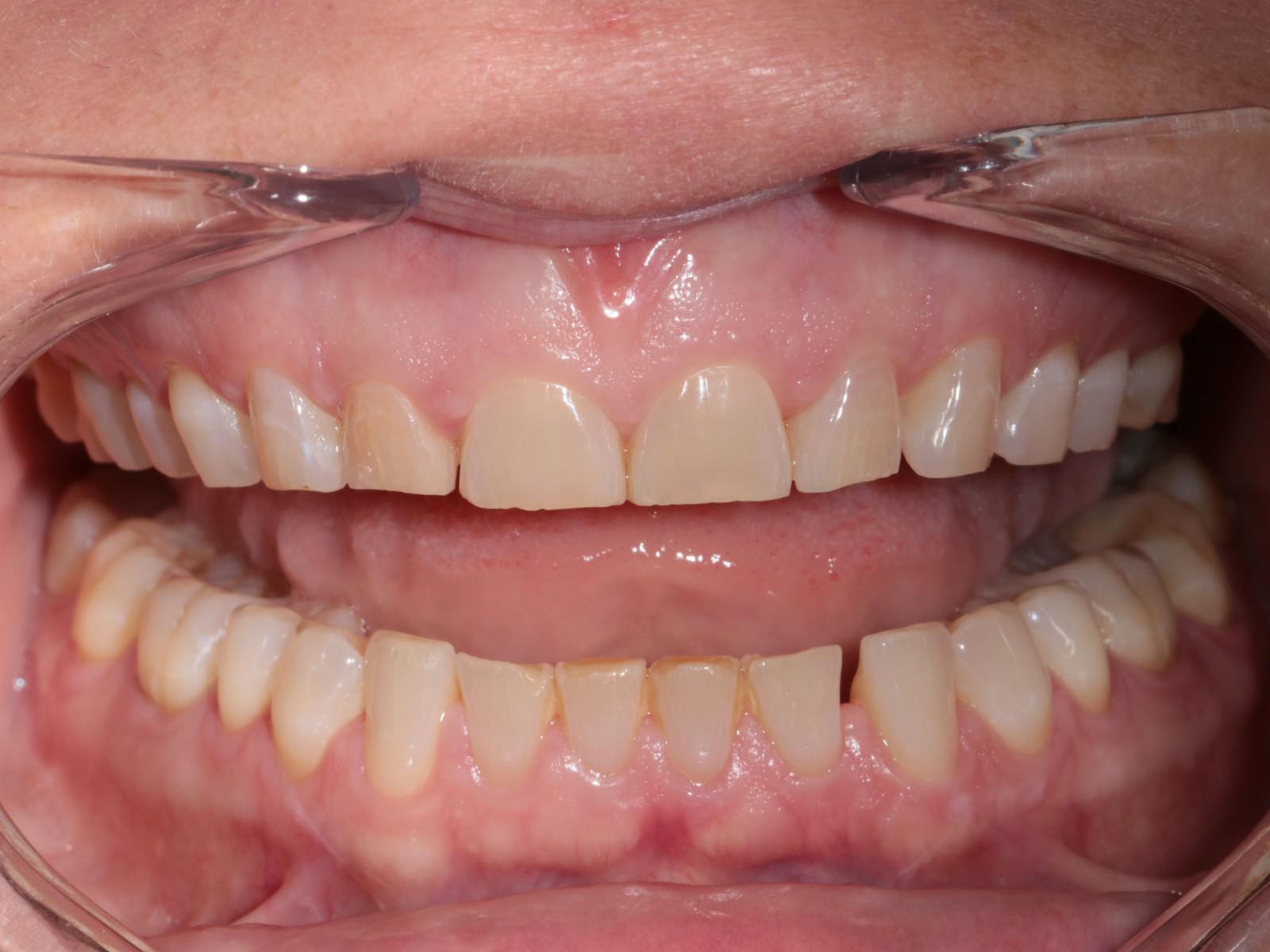
Good oral hygiene is important
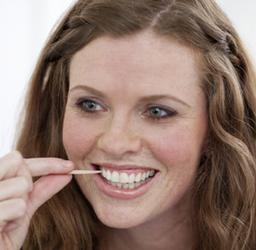
Good oral hygiene keeps your teeth and gums healthy. Brushing your teeth twice a day for two minutes with fluoride toothpaste is the basis for this. A toothbrush alone cannot always clean the spaces between your teeth properly. You can use toothpicks for this, for example.
Dental plaque
Plaque forms on and between your teeth. To keep your mouth healthy, you need to remove this barely visible, white-yellowish layer. Plaque consists mainly of bacteria and bacterial products. If you do not remove plaque regularly, the bacteria can cause gum inflammation and cavities. Plaque that is not removed can harden and calcify into tartar. New plaque easily adheres to tartar. The gums can become increasingly inflamed. The inflammation can spread and affect the underlying jawbone. Eventually, so much jawbone can be lost that your teeth become loose.
Removing plaque between teeth and molars with toothpicks
To remove plaque between your teeth, you can use various tools, such as toothpicks, dental floss or interdental brushes. Consult your dentist or dental hygienist to find out which tool is most suitable for you. Use a toothpick once a day if it fits well in the space between your teeth. If the spaces between your teeth are very small, it is better to use dental floss. If the space is too large for a toothpick, use interdental brushes.
What does a good toothpick look like?
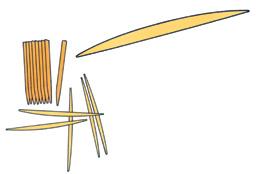
The spaces between the teeth of most adults are suitable for the use of toothpicks. A good toothpick is made of wood, triangular in shape with a flat side and tapering to a point. They can vary in thickness. For larger spaces, you can use thicker toothpicks. For narrower spaces, choose a thin variety. Consult your dentist or dental hygienist about the size. Round toothpicks do not exist; those are cocktail sticks. They are not intended for cleaning your teeth. They are used to remove food debris after a meal. To remove plaque, use triangular wooden toothpicks. Dispose of the toothpick after a single use.
At first, using toothpicks can be difficult and painful. The gums bleed easily because they are still inflamed. When you use toothpicks every day, the inflammation disappears and so does the bleeding. What's more, using them becomes less painful. Bleeding gums can also be the result of using the wrong technique. If the bleeding does not improve or actually gets worse, consult your dentist or dental hygienist.
How should I use toothpicks?
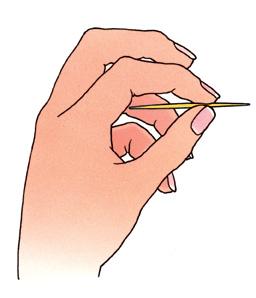
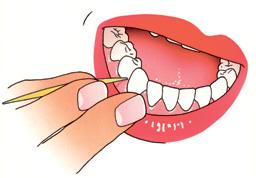
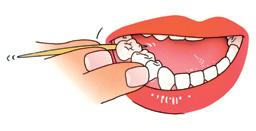
1. Hold the toothpick between your thumb and forefinger close to the tip. Support it against the adjacent teeth or molars with your other fingers. Moisten the tip of the toothpick with saliva. This makes the wood more flexible and reduces the risk of breakage.
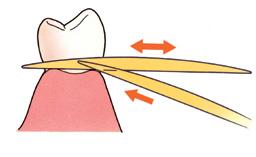
2. Place the narrow flat side of the toothpick on the gums, below the point where the teeth meet. Insert the toothpick between the teeth. Do this as perpendicular to the row of teeth as possible.
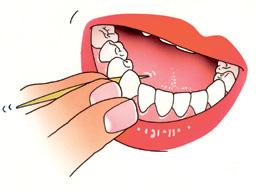
3. Avoid poking your gums. If you do poke your gums, place the toothpick at a slight angle. For the upper jaw, angle it from above; for the lower jaw, angle it from below.
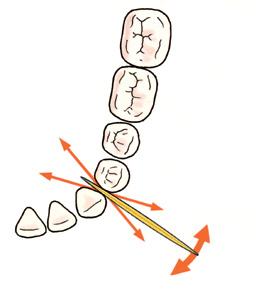
4. Push the toothpick firmly between the teeth three times. Increase the contact surface with the tooth by changing direction (X-shape).
5. Clean all spaces that a toothpick can fit into (X-shape).
6. Close your mouth slightly when using the toothpick at the back of your mouth. This reduces the tension on your cheeks. You can also bend the moistened toothpick slightly. This reduces the amount of space required when inserting it.
Please note: Excessive or incorrect use of oral hygiene aids can cause damage to teeth and gums.
Want to know more?
Then download the free GezondeMond app. The app is available for Android and tablets, available via Google Play. The app for iPhone and iPad can be found in the iTunes App Store..


<< Back© Ivory Cross