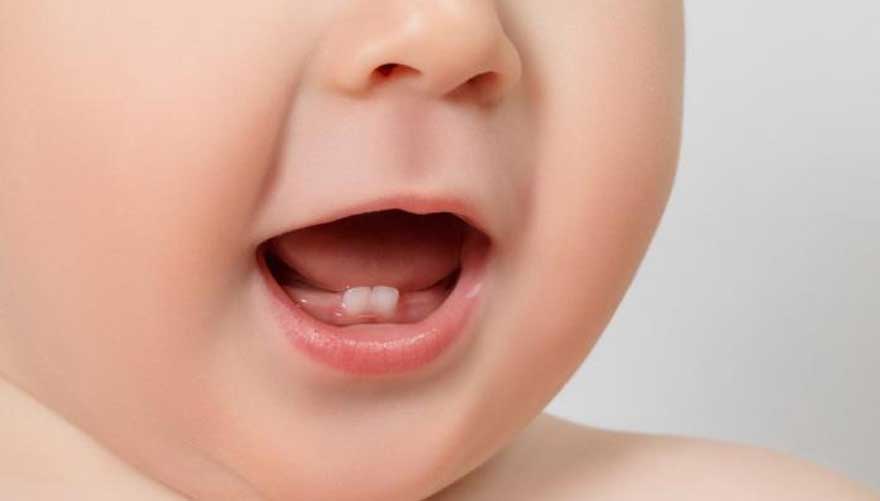
Brush as soon as the first tooth appears

Your baby is already 6 months old. A milestone. There is a good chance that a tooth will erupt soon. You may already see a thickening in the middle of the lower jaw. That is where the first tooth will appear. Start brushing teeth as soon as you see the first tip of the tooth.
Fluoride toothpaste for toddlers
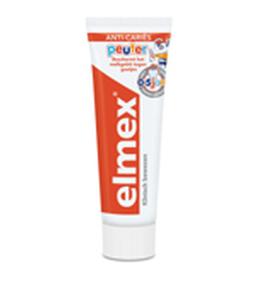
Brush teeth once a day with fluoride toothpaste for toddlers. The amount of fluoride in fluoride toothpaste for toddlers is adjusted for use by small children. Fluoride is a natural substance that hardens the enamel, making it less vulnerable. Using the right amounts of fluoride helps prevent cavities in teeth and molars. For children aged 2 and above, brush their teeth twice a day with fluoride toothpaste for toddlers. From the age of 5, switch to fluoride toothpaste for adults. You can also use toothpaste labelled ‘children’ or ‘junior’. In that case, check the age range indicated (e.g. 5-12 years).
Brush with a toddler toothbrush
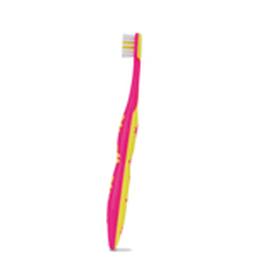
A small brush makes it easy to reach all teeth. Use a toddler's toothbrush with soft bristles.
Brushing your teeth: a daily ritual

Introduce your child to brushing their teeth in a playful way. Make it a recognisable daily ritual. In the beginning, applying fluoride with toothpaste is more important than reaching every spot with the brush. Brush the tips of new teeth that are coming through immediately. The enamel on newly erupted teeth is not yet strong. This makes them extra susceptible to cavities. Brush your child's teeth daily until they are 10 years old.
Brushing your teeth, how do you do it?
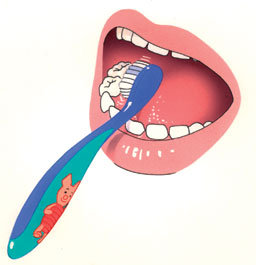 Start with the Inside
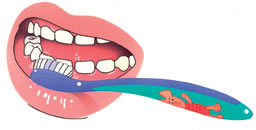 Then clean the outside
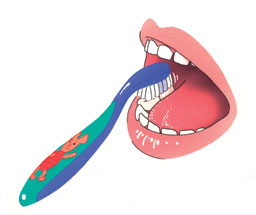 and then on top (the chewing surfaces)
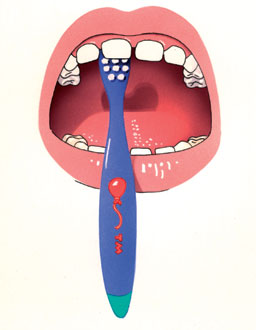 Start again on the inside first
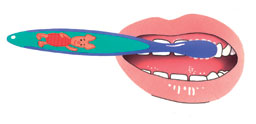 Clean the outside
.jpg) And finally, on top of that
And finally, on top of that
For example, lay your child on the changing mat, on the bed or hold them on your lap while brushing their teeth. Make sure you support their head and can see their mouth properly. Is your child already older? Then stand or sit diagonally behind them and turn their head towards the light. Place the toothbrush straight on the teeth. Brush gently and use short horizontal movements. This will remove harmful plaque. You can also use an electric toothbrush for children. Brush in a fixed order and according to the 3 Bs: Inside, Outside and Top. Always brush the edge of the gums as well.
First brush the teeth in the lower jaw.
Then brush the teeth in the upper jaw.
First tooth? Off to the dentist!
 Take your child to the dentist when their first tooth comes through.
 The dentist or dental hygienist will give you advice on how to keep your child's teeth healthy.
Take your child to the dental practice when their first tooth appears. For example, when you go for a check-up yourself. The dentist or dental hygienist will explain how best to care for your child's teeth. You will also learn the right eating and brushing habits for your child at an early age. If your child visits the dental practice at a young age, they will have plenty of opportunity to get used to the environment and become familiar with the staff. Your practitioner will let you know when your child needs to return to the practice.
Baby teeth

Adult teeth do not fit in a child's small mouth. That is why you first get milk teeth. Milk teeth are important for biting, chewing, speaking and swallowing. Milk teeth influence the development of the face and jaws. They also play an important role in the development of the permanent teeth. A child's milk teeth are naturally replaced by permanent teeth. You might think that this means it is not important to take good care of milk teeth. Nothing could be further from the truth. Poor dental care can cause cavities and gum inflammation. This can be painful, causing your child to eat less, feel unwell or sleep poorly. Poor care of the milk teeth can also affect the permanent teeth. This happens, for example, if milk teeth are lost prematurely. This often leaves too little space for the permanent teeth.
When do children get their milk teeth?
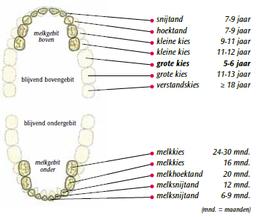 At this age, the teeth usually erupt.
The age at which children get their teeth varies from child to child. Usually, the first milk tooth erupts between 6 and 9 months. The first 2 milk teeth appear at the bottom in the middle. These are followed by the two middle incisors at the top. The last milk molar usually appears between 24 and 30 months. A full set of milk teeth consists of 12 teeth and 8 molars. Both milk teeth and permanent teeth usually erupt in a specific order (see diagram).
Thumb or dummy?
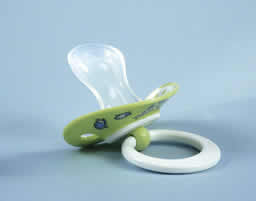
Dental teat
Sucking is a natural, instinctive need for babies. Children like to suck their thumbs or pacifiers. This usually does not cause any problems for their milk teeth. When the permanent incisors erupt, sucking can push the upper teeth and jaw forward. Does your baby suck their thumb? Then it is better to give them a dental dummy. Children put their thumb in their mouth more quickly and more often. A dummy is easy to remove. That is why it is usually easier to wean a child off a dummy. In any case, wean your child off thumb sucking or dummy sucking as early as possible, but in any case before the permanent teeth erupt.
I prefer a cup to a bottle.
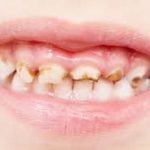
From 9 months onwards, use a cup without a spout instead of a feeding bottle or non-spill cup. You could use a spouted cup as an intermediate step. Drinking from a feeding bottle containing sweet drinks or milk is particularly harmful in the evening and at night. At night, there is less saliva to protect your teeth. You can always take a bottle of water to bed with you. Frequent sucking on a feeding bottle or non-spill cup containing fruit juice, syrup, drinking yoghurt or other milk products can damage the teeth. The teeth are exposed to sugars for long periods of time. This increases the risk of (bottle) caries. Let your child drink their sweet drinks in one go. Choose tap water instead of sweet drinks.
Want to know more?
Then download the free GezondeMond app. The app is available for Android and tablets, available via Google Play. The app for iPhone and iPad can be found in the iTunes App Store..
© Ivory Cross