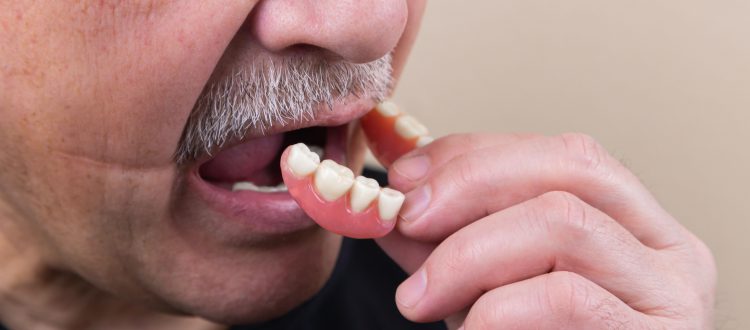
From natural teeth to dentures

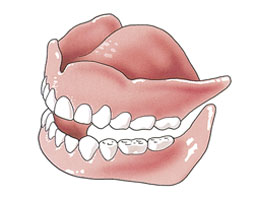
Teeth are important for chewing, speaking and appearance.
You are getting dentures. This is a big change, because your new dentures play an important role in chewing and speaking. What's more, your dentures are very important for your appearance. After all, your teeth are the first thing people notice about you.
Extracting teeth
Teeth are usually not extracted all at once. The dentist will first extract your molars. Only later will your teeth be extracted. This means that your teeth will remain in place for the time being, so that you will not be left without teeth. There is usually a few weeks between the extraction of the molars and the teeth. In the meantime, the gums have the opportunity to heal and recover. You will therefore have to manage without your molars for a while. This can make eating a little difficult. If the wounds have not yet healed, it is best to eat soft foods. After that, you can eat whatever you normally eat. Your ability to chew will usually be reduced.
Make a print
Before the dentist extracts the teeth, he takes an impression of your jaw. This is done using an impression tray filled with a special impression material. In the dental laboratory, this impression is filled with plaster to create a plaster model. A well-fitting impression tray made of synthetic resin is then created on top of this. This tray is used to make another impression in order to obtain an even more accurate plaster model. Your dentures are then made on top of this.
Are you satisfied with the colour, shape and position of your own teeth? Or perhaps not? Inform your dentist about this before the dentures are made. Your dentist can advise you on this. He will try to take your wishes into account as much as possible.
The dentures are fitted immediately.
In the past, people had to go without teeth for a while before getting dentures. Nowadays, that is no longer necessary. Dentures, also known as immediate dentures, are placed in your mouth immediately after the last teeth have been extracted. So directly over the fresh wounds. You may find this a strange idea, but it has a major advantage. In the beginning, your dentures act as a kind of bandage on the wounds.
When you look in the mirror, it will probably take some getting used to. Your mouth is now an important focal point, and it has changed. Take a few days to get used to it and only then assess how you look with your new teeth.
See also New dentures
The first day with dentures
Your new dentures may not feel comfortable on the first day. They may pinch and sometimes cause pain. However, you should not remove them from your mouth. This could cause your gums to swell, meaning that the dentures will no longer fit properly in your mouth.
Post-operative bleeding
The wounds may bleed a little in the first few hours after your teeth have been extracted. This may cause your saliva to turn red. This will stop fairly quickly. Your saliva will then return to its normal colour. This does not mean that the wounds have healed completely. It is also best not to rinse your mouth for the first 24 hours. This is because blood clots form in the wounds. If you rinse, these clots will come loose and the bleeding will start again. You may drink, however.
There is a small chance that the bleeding will not stop, despite the precautions taken. If this happens, please notify your dentist. Please also contact your dentist if you continue to experience pain. In any case, do not simply take a painkiller. Some painkillers can actually make the bleeding worse. Discuss with your dentist what you should and should not do during the first 24 hours.
Getting used to dentures

Start with soft food for the first few days.
You may only remove your dentures from your mouth after the first day. Depending on what you have agreed, your dentist will do this or you will do it yourself. Be careful with the wounds if you are allowed to do this yourself. Rinse the dentures and brush them clean. To clean your mouth, you can gently rinse it with lukewarm water. You can add a little salt to the water if you wish. You can also use a chlorhexidine mouthwash available from the chemist, such as Perio-Aid or Corsodyl. Rinsing with lukewarm chamomile tea is also very effective. After a few days, the wounds will start to heal and the pain will disappear. You will then gradually get used to your dentures. This takes time. Some people get used to them more quickly than others. Are you finding it very difficult? Ask your dentist for advice.
Food
Eating with your new dentures may feel a little awkward at first. You will need to be careful, especially in the beginning. You will soon discover for yourself what you can and cannot do. Eat soft foods such as mashed potatoes, minced meat and soft fruit for the first few days. A few days later, try a piece of fish and a potato. Later on, you can eat foods such as meat or an apple. It is better not to bite off pieces with dentures. Therefore, cut your food into small pieces and chew slowly and evenly with your new dentures. Take a piece of food in your mouth on both sides. Take a little more time than you are used to.
Talking
At first, you may find it a little awkward to speak with your new dentures. You may lisp, for example, or certain sounds may sound different than you are used to. It is as if you are speaking with a full mouth. This is normal. Your mouth still needs to get used to your new dentures. It usually gets a lot better after a few days. Practise extra with those words or letters that don't sound quite right yet. For example, read the newspaper aloud.
Regular cleaning of dentures
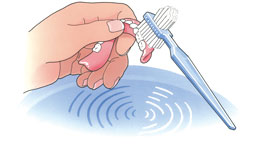 Clean your dentures after every meal.
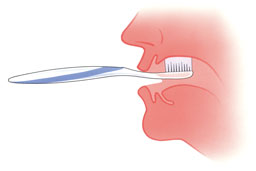 Clean your palate too
The dentures
Your dentures are still new and beautiful. Naturally, you want to keep them that way. That is why you need to take care of your dentures, just as you would your own teeth. If you do not clean them regularly, food debris will remain on and under your dentures. If you do not remove this debris, your gums may eventually become inflamed. Therefore, clean your dentures carefully after every meal. Use a special denture brush, for example from Lactona or Oral-B, and water to remove food debris thoroughly. Do not use toothpaste, as this can be too abrasive. Clean dentures always feel smooth. Be careful not to let your smooth dentures slip out of your hands while cleaning them, as they will break. To be on the safe side, fill the sink with water first and clean your dentures over it.
Clean your dentures daily with a cleaning agent available from a chemist or pharmacy. Follow the manufacturer's instructions. If necessary, ask your dentist or dental hygienist for advice. Be sure to soak your dentures in a cleaning solution overnight once a week. This will prevent tartar build-up on your dentures. Then brush your dentures thoroughly and rinse them with water. Never soak your dentures in hot water and never use bleach or abrasive cleaners.
Clean your mouth too
In addition to your dentures, keep your mouth clean. In the beginning, when the wounds have not yet completely healed, rinse your mouth with a little lukewarm water after every meal. Afterwards, it is best to brush your gums with a soft toothbrush. Use regular fluoride toothpaste for this. At least once a day, massage the mucous membrane on which your dentures rest with a soft toothbrush: your jaws and the transition from the jaw to the cheeks. Also brush your palate, as food debris can accumulate there as well.
Sleeping with or without dentures
Your jaws need some time to get used to the dentures. Leave your dentures in your mouth at night during the first week. After that, it is better to take them out before going to bed. This will also give your jaws a rest. Do you find it uncomfortable to sleep with an empty mouth? Then just take out your lower dentures. If you still want to wear your entire dentures day and night, have your mouth and dentures checked by your dentist at least once a year.
If you are not wearing your dentures, store them in a glass of water. Change the water every day. You can also store your dentures in a glass filled with cleaning solution. Always rinse your dentures thoroughly with water before putting them back in your mouth.
Adjustments to dentures
After some time, you will feel that your dentures are slightly looser. This is normal. The wounds have healed, causing your jaws to shrink slightly. This has created space between your jaw and your dentures. After about six weeks, or preferably a little longer, the dentist can adjust your dentures. He can apply a new layer or ‘lining’ to your dentures, making them fit more securely again. In most cases, you will then have to do without your dentures for one or two days.
Once you have a cover prosthesis, is it ready forever?
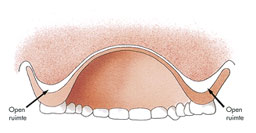 Your jaws shrink, causing your dentures to become loose.
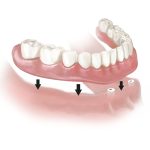
Over time, you will become accustomed to your new artificial teeth. So much so, in fact, that it will seem as if they have always been there. However, this will not remain the case. Your mouth will change as your jaws shrink. Your dentures will remain the same size. This creates space between your overdenture and your jaw, causing your teeth to become loose over time. With an overdenture, the jaws shrink much less quickly than with regular dentures. If your overdenture no longer fits properly, it may press harder on some parts of your jaw than others. This can cause pain. If this happens, consult your dentist. Do not sand or file your overdenture yourself! In such cases, your dentist will adjust your dentures. They can apply a new layer or ‘lining’, which will make the overdenture fit more securely again.
Monitoring by the practitioner is important
To prevent pain and to detect any loosening of your dentures in good time, it is advisable to visit your practitioner at least once every two years. Go even if you have no complaints. The shrinking of your jaws is very subtle. You will not notice it at first. Your practitioner can make your dentures fit properly again. Or he can advise you to get new ones in good time (usually after about ten years), because dentures can also wear out. The practitioner will also check whether your mouth is still healthy. People with poorly fitting dentures or people who have been wearing their dentures for many years are particularly prone to developing unpleasant oral abnormalities.
Adhesive pastes, adhesive powders and other aids
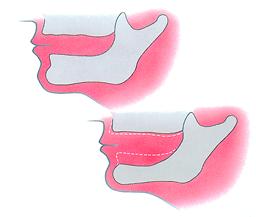
The shrinking of your jaws happens very imperceptibly.
There are all kinds of adhesive pastes, powders and ‘liners’ on the market to give dentures more grip. These products are actually all temporary solutions. They do not really address the root cause of the problem. Never put cotton wool under your dentures. This will only cause your jaws to shrink more quickly. Are your dentures becoming loose? Then visit your practitioner. They will usually see immediately what the problem is and can give you the best advice.
Want to know more?
Then download the free GezondeMond app. The app is available for Android and tablets, available via Google Play. The app for iPhone and iPad can be found in the iTunes App Store..
© Ivory Cross