Tooth erosion in children

All children love sweets and lemonade. All parents know that eating sweets causes cavities because they contain a lot of sugar. Far fewer parents know that many sweet products also contain acids. You cannot taste them because the sweet taste dominates. However, these added acids in food and drinks cause another problem for children's teeth: tooth erosion. The enamel on your child's new permanent teeth is not yet fully hardened. This makes children's teeth extra vulnerable to acids.
Children eat and drink throughout the day.
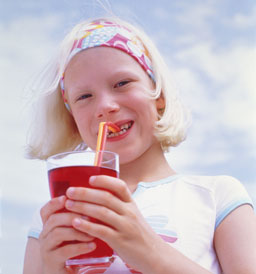
Soft drinks and sports drinks are being consumed more frequently and in greater quantities.
The days when we ate three meals spread throughout the day are long gone. For example, we are consuming more and more soft drinks and sports drinks. Your child is doing this too, without you realising it. Many of these drinks contain acids that can cause tooth erosion. It is not just about how many acidic products your child eats and drinks. The more often and the longer your son or daughter keeps acidic products in their mouth, the greater the risk of tooth erosion. The way your child eats and drinks also has an influence. For example, do they wait to swallow until the fizz has gone out of the drink? Or do they swish a drink around in their mouth for the taste?
Tooth erosion, what is it?
Tooth erosion is the dissolution of tooth enamel due to acid attack. It is an insidious process that is not easy to recognise and difficult to treat. That is why prevention is of the utmost importance. If tooth erosion is not treated, the acids will dissolve the tooth enamel and then even the exposed dentine. Once tooth enamel has been worn away, it will not grow back.
What does tooth erosion look like?
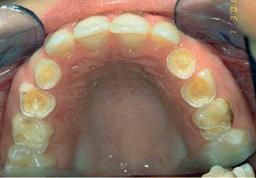
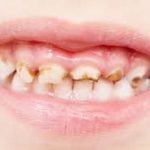
Tooth erosion in an 8-year-old child
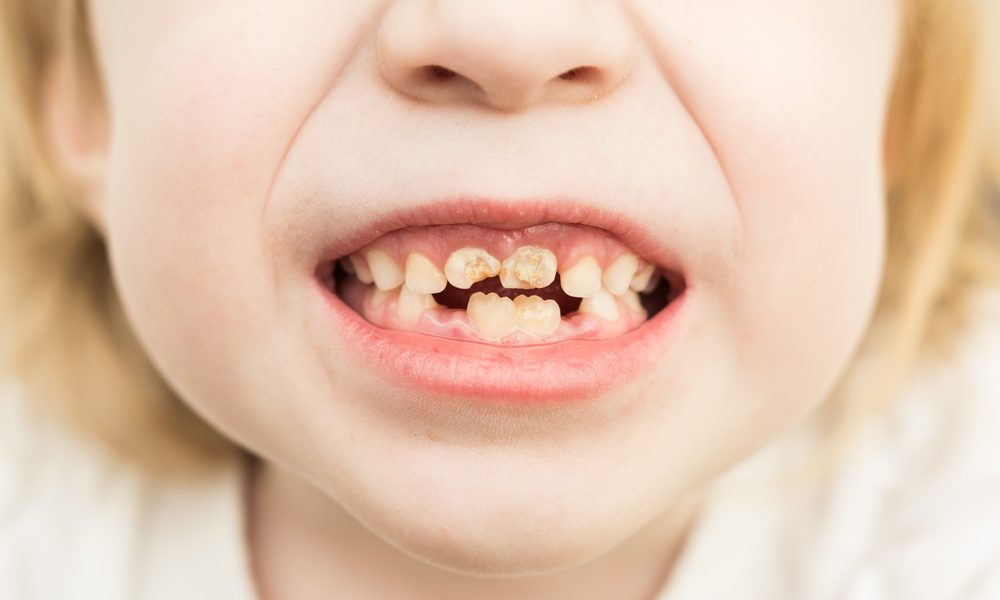
Tooth erosion is only visible at an advanced stage, when the appearance of the teeth changes. By then, it is too late. Fortunately, your dentist or dental hygienist can detect it earlier. Tooth erosion can cause the front teeth to become shorter, thinner (and therefore more vulnerable to breakage) or develop translucent and ragged edges. Furthermore, the teeth may become increasingly yellow in places or develop dark spots. This is because the enamel becomes thinner and the underlying yellow dentine shines through. Pits may form in the cusps of the molars. At a later stage, the cusps of the molars may even disappear completely. Your child will then be chewing on the dentine, which causes pain and sensitivity. Erosion does not affect fillings in teeth and molars. As a result, the fillings may protrude above the tooth surface.
Saliva protects (children's) teeth
Fortunately, saliva protects teeth against tooth erosion. Saliva neutralises the acids in food and drinks. If your child consumes acidic products throughout the day, saliva does not have enough time to neutralise the acid. To reduce the risk of tooth erosion and cavities, limit the number of times your child eats or drinks to a maximum of seven times a day.
Culprits of tooth erosion

Soft drinks and fruit juice
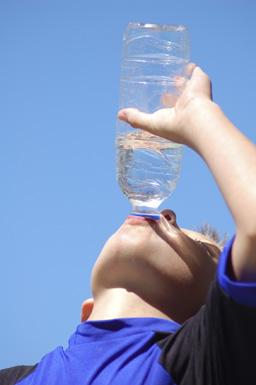
Soft drinks (including diet versions!) get their refreshing taste from added phosphoric acid (for example in cola), citric acid or malic acid (in all kinds of soft drinks and sports drinks). Your child does not notice the sour taste because of the added sugar or sweetener. Sugar suppresses the sour taste, but does not neutralise the acid. Did you know that fruit juices (e.g. apple and orange juice) are even more acidic? This means they are even worse for children's teeth. Bear in mind that almost all drinks are acidic. Water, plain tea (without sugar) and milk are exceptions.
Nutrition
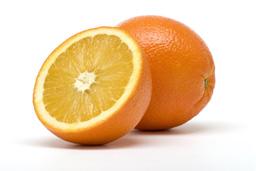
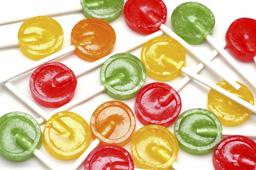
All acidic foods, no matter how healthy, can be harmful to children's teeth. You should be particularly careful with acidic fruits. These include citrus fruits, blackberries and berries, apples, grapes and kiwis, as well as products made from them (apple syrup, jam, fruit juice). Sour sweets can also cause damage. These include liquorice, sour strips, wine gums, fruit toffees and lollipops. Candy sprays and gels are also extremely acidic. Small amounts of these are applied to the mouth or tongue, causing the teeth to be repeatedly exposed to acid. Lollipops and other chewy sweets are particularly harmful because the acids remain in the mouth for a long time. All foods that have been acidified with, for example, vinegar or citric acid, such as salad dressing or mayonnaise, cause tooth erosion when consumed frequently. Many children suck on vitamin C tablets instead of swallowing them straight away. This can be disastrous for their teeth. Vitamin C products are already slightly acidic and are also flavoured with added sweeteners and citric acid.
How can you prevent tooth erosion in children?
Do not use acid for one hour before brushing your teeth!
To prevent or limit tooth erosion in your child, there are a number of measures you can take:
Food and drink
- Limit the consumption of acidic drinks and foods. As an alternative, give water, plain tea without sugar, i.e. no fruit or herbal tea or milk, if possible.
- Limit the amount of fruit juices and soft drinks, or dilute them with water.
- Limit the number of times your child eats or drinks.
- Provide three meals a day and no more than four snacks in between.
- Give your child acidic fruit no more than once or twice a day.
- Teach your child to keep acidic products in their mouth for as short a time as possible (do not swish drinks around in the mouth and do not suck on sour sweets or other acidic products).
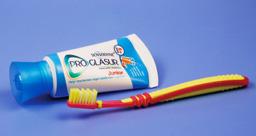
- Do not give your child any acidic products for one hour before brushing their teeth. The surface of teeth becomes softer when exposed to acid. If your child brushes their teeth immediately after eating or drinking something acidic, they can easily brush away the enamel layer.
NB. If your child drinks while eating, this counts as one moment.
Brushing teeth
Ensure that your child:
- Brush your teeth twice a day for two minutes.
- Used a soft (electric) toothbrush.
- Do not brush his teeth too vigorously. A little pressure is sufficient.
- Fluoride toothpaste is used. Fluoride strengthens tooth enamel and makes it less soluble in acid.
- Visit the dentist or dental hygienist twice a year.
Want to know more?
Then download the free GezondeMond app. The app is available for Android and tablets, available via Google Play. The app for iPhone and iPad can be found in the iTunes App Store..
© Ivory Cross